From a Refugee Stall to Chembur’s Diwali Ritual: The Sweet Story of Jhama
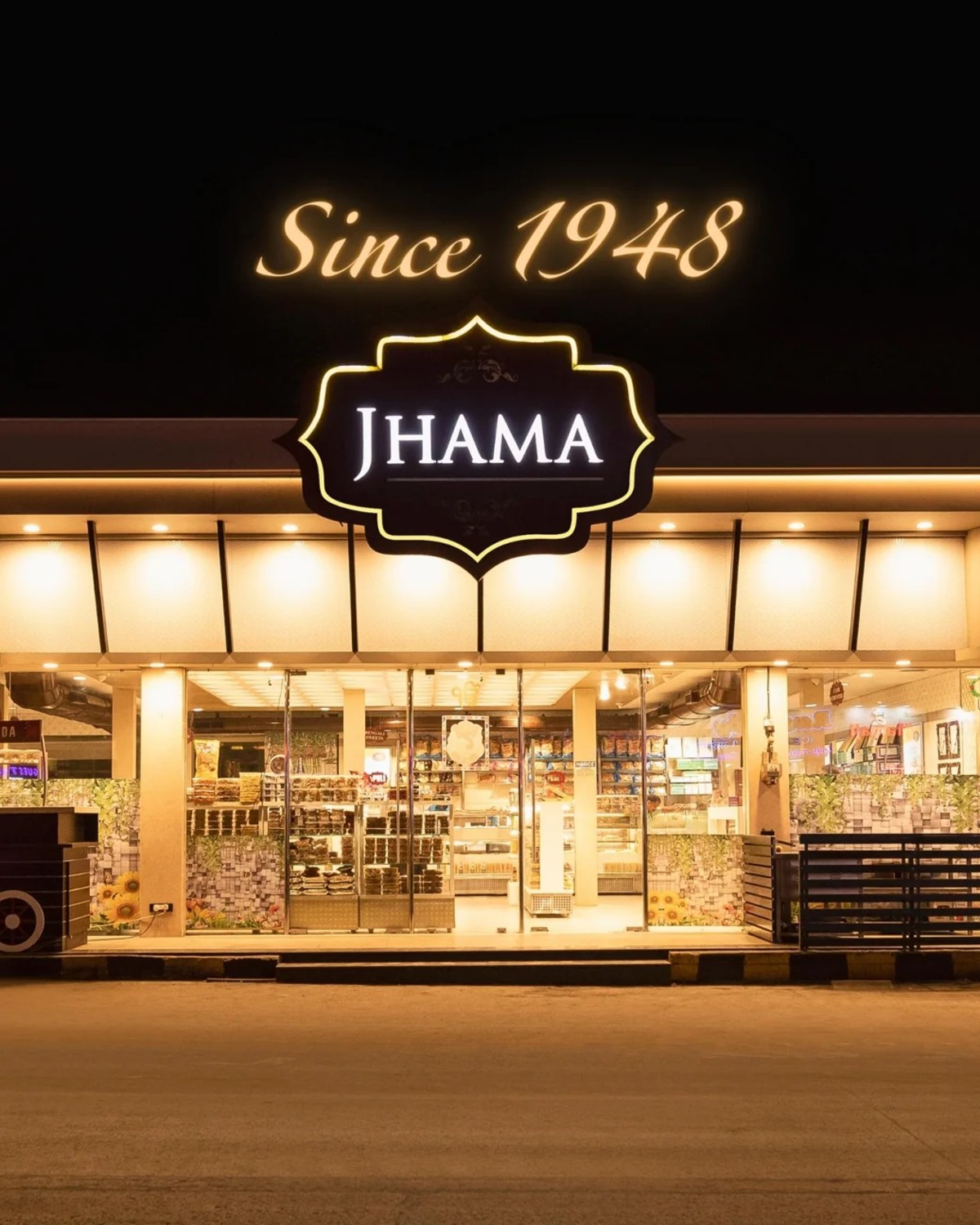
Every Diwali, Chembur Camp smells of roasted mawa and sugar syrup. Most of that comes from Jhama Sweets.
The story starts with loss. When Partition pushed the Lulla family out of Sindh’s Larkana district, they came to Bombay as refugees and were sent to a camp in Chembur, then on the city’s edge. Jhamamal Sadhuram Lulla, still in his twenties, had a wife, a child and one skill: making mithai, which he had learned at his maternal uncle’s sweet shop back home.
So he set up a roadside stall measuring two feet by four. He sold just two things: gulab jamun and sev barfi, a Sindhi sweet of mawa, chopped nuts, a hint of rose and unsalted sev. He made them himself at dawn, opened at 7 am sharp and sold until the trays were empty.
Chembur kept coming back. When refugees were given small plots for shops, Jhamamal bought the one next door too. Through the 1950s and 60s, the stall grew into a 2,000 sq ft store, with samosas, pattice and dahi bhalla added along the way. The flagship still stands in Chembur Camp, on the spot where it all began.
For decades, people say, Jhama was the only shop in Mumbai selling sev barfi, and buyers crossed the city for it. Sev barfi is still the fastest-selling item on the counter. Staff swap in fresh aluminium trays every couple of hours.
Today his sons, Govind and Vinod “Vicky” Lulla, run the business, and the third generation runs e-commerce and a branch. Jhama has 11 outlets across the Mumbai region, from Sion and Ghatkopar to Thane, Vashi and Kharghar. A central kitchen keeps the recipes the same everywhere.
The Diwali counter has grown well beyond the original two sweets: kaju katli, motichoor ladoos, kalakand, pista barfi, milk cake, Karachi halwa and the signature Kaju Mix. If your family is spread out, the brand ships across India from its website. Its packaging keeps milk sweets fresh for up to a week without preservatives.
Still, the advice for this Diwali is simple. Start where Jhamamal did. Get a box of gulab jamun and a slab of sev barfi from Chembur Camp. More than seven decades on, these two sweets still taste like the neighbourhood’s own history.